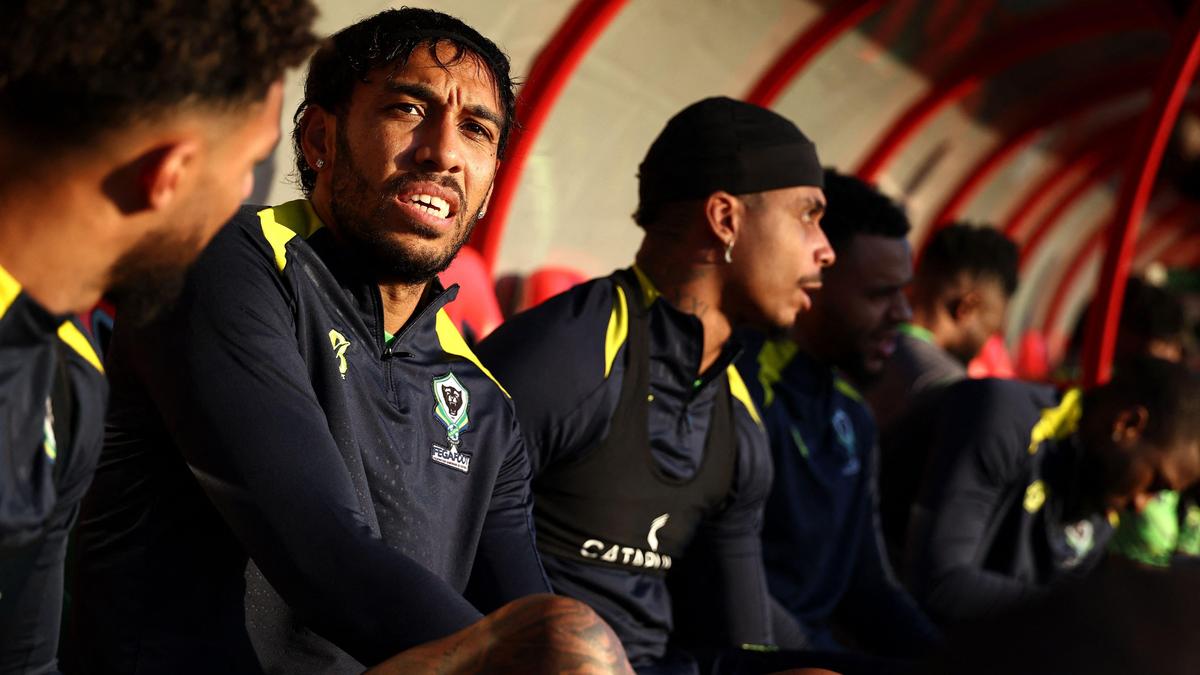
In a stunning move that has sent ripples through the international football community, the Gabonese government has announced the immediate dissolution of its senior men’s national football team. This unprecedented decision, publicly declared by Gabon’s Minister of Sports on January 1, 2026, also includes the dismissal of the team’s head coach, Thierry Mouyouma, and notably, star striker Pierre-Emerick Aubameyang.
The drastic action follows the team’s dismal performance and early exit from a recent Africa Cup of Nations (AFCON) tournament. The government cited the team’s abysmal run in the competition, which saw them finish at the absolute bottom of Group B, failing to secure a single victory and consequently being eliminated at the group stage. This outcome was officially deemed ‘the most shameful thing in their football sector’ by the authorities, prompting the severe response.
During their ill-fated AFCON campaign, Gabon, under the guidance of former defender Thierry Mouyouma, suffered consecutive 2-0 defeats against both Cameroon and Mozambique. Adding to the humiliation, their final group stage match, played in Marrakech, concluded with a 3-2 loss to Ivory Coast, who reportedly fielded a second-string squad for that particular fixture.
Immediately after their national team duties concluded, both Aubameyang and defender Ecuele Manga returned to their club, Olympique de Marseille, in France, reportedly for injury treatment. However, shortly after his departure from the national setup, the former African Player of the Year took to social media platform X (formerly Twitter) to hint at deeper, internal issues within the national team, suggesting that problems extended far beyond any individual player’s performance or direct blame.
While the dissolution of national teams in certain African regions is not entirely unheard of following extremely disappointing results—especially after failing to win any matches in major tournaments—Gabon’s action stands out. The global football governing body, FIFA, has a strong stance against governmental interference in the affairs of its member associations. This steadfast position makes the Gabonese government’s direct intervention in its national team’s operations a rare and potentially problematic development on the international football stage. The decision to suspend the national team’s activities indefinitely, until a new operational structure is announced, underscores the profound frustration within the Gabonese administration over the team’s recent displays.