The highly anticipated FIFA World Cup 2026, set to be co-hosted across the United States, Canada, and Mexico, is fast approaching. This groundbreaking tournament will feature an expanded format with 48 national teams competing for the first time, and it will unfold in some of the most technologically advanced and certainly the most expensive stadiums ever assembled for a global sporting event. The significant investment in these venues underscores the monumental scale of the upcoming football spectacle.
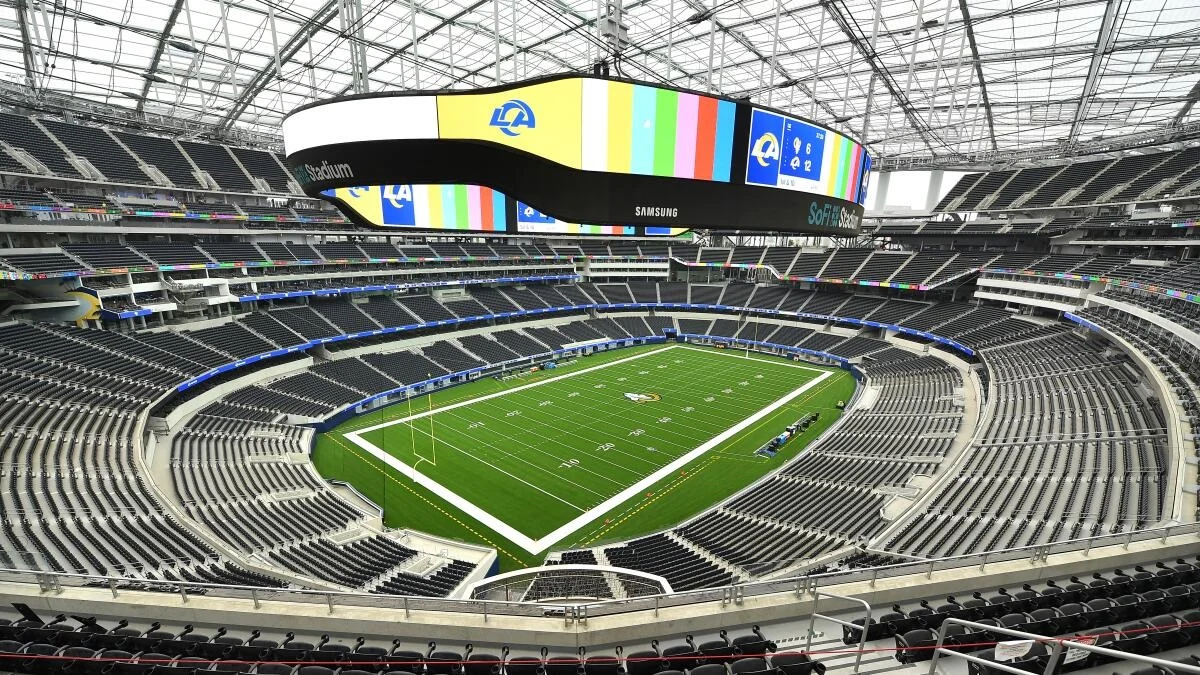
Leading the charge in terms of sheer cost is the magnificent SoFi Stadium in Inglewood, California. This colossal venue, which is slated to host a crucial Group D match featuring the United States national team, represents an astonishing investment of $5.5 billion. With a seating capacity of 70,000, SoFi Stadium is not only a premier soccer destination but also the proud home of the NFL’s Los Angeles Rams and Los Angeles Chargers. Its versatile design allows it to host a wide array of events, from major sporting competitions beyond football to grand concerts and entertainment spectaculars.
Following closely in terms of financial outlay is MetLife Stadium, located in East Rutherford, New Jersey. This impressive arena, which is being considered as a potential host for the World Cup final, boasts a capacity for 82,500 spectators. Constructed at a cost exceeding $1.6 billion and officially opened in 2010, MetLife Stadium stands as a formidable venue. Notably, it is an open-air stadium without a retractable roof and serves as the joint home for two NFL franchises: the New York Giants and the New York Jets.
Another state-of-the-art facility with a similar price tag is Mercedes-Benz Stadium in Atlanta, Georgia. Valued at approximately $1.6 billion, this modern stadium, despite having a slightly smaller capacity of 71,000, is a hub for two major sports teams: the NFL’s Atlanta Falcons and Major League Soccer’s Atlanta United. Its cutting-edge design and capabilities make it an ideal choice for hosting both group stage and knockout round matches during the 2026 World Cup.
Ranked fourth among the priciest venues is Levi’s Stadium in Santa Clara, California, near San Francisco. Opened in 2014, this stadium was built at a cost of $1.3 billion and can accommodate 68,500 fans. Like MetLife, Levi’s Stadium is an open-air venue and has gained significant popularity for hosting a diverse range of major sporting events, including the Super Bowl, WrestleMania, and prominent collegiate football championship games.
Coming in fifth on the list of most expensive venues is AT&T Stadium in Arlington, Texas, within the Dallas metropolitan area. This stadium, renowned for its architectural grandeur and advanced features, was constructed at an estimated cost of $1.2 billion. While not quite as expensive as SoFi, it offers a comparable level of luxury and technology, and is one of the high-capacity venues crucial for the tournament.
The investment in hosting facilities extends across North America, with several other significant stadiums playing crucial roles. These include:
* **Lincoln Financial Field** in Philadelphia, Pennsylvania: Constructed for $512 million, with a capacity of 69,176 spectators.
* **Lumen Field** in Seattle, Washington: Built at a cost of $430 million, accommodating 68,740 fans.
* **NRG Stadium** in Houston, Texas: Developed for $352 million, capable of hosting 72,220 fans.
* **Gillette Stadium** in Foxborough, Massachusetts: An initial investment of $325 million has been supplemented by over $250 million in modern technological upgrades, providing seating for 65,878.
* **Hard Rock Stadium** in Miami Gardens, Florida: Initially built for $115 million, it has undergone extensive renovations totaling approximately $500 million to prepare for the World Cup, offering a capacity of 64,767.
* **BC Place** in Vancouver, British Columbia, Canada: Originally constructed for $126 million, it has seen renovations for the World Cup estimated between $483 million and $624 million, increasing its capacity to 54,500.
* **Estadio BBVA** in Monterrey, Mexico: Built for $200 million, this Mexican venue can hold 53,500 people.
* **Estadio Akron** in Guadalajara, Mexico: Valued at $149 million, with an additional $12.4 million invested in lighting and sound system upgrades, it accommodates 48,071 spectators.
* **BMO Field** in Toronto, Ontario, Canada: Initially a $62 million project, it has received $146 million in renovations to expand its capacity to over 45,000.
* **Arrowhead Stadium** in Kansas City, Missouri: With an original construction cost of $43 million, it has received over $20 million in seating renovations, allowing it to host 76,416 fans.
* **Estadio Azteca** in Mexico City, Mexico: A historic venue, initially built for $18 million, it has seen a substantial $150 million refurbishment to modernize its facilities, maintaining a grand capacity of 87,523, making it the largest host stadium for the tournament.
The collective investment in these world-class stadiums ensures that the FIFA World Cup 2026 will not only be a spectacular sporting event but also a showcase of cutting-edge infrastructure across North America.