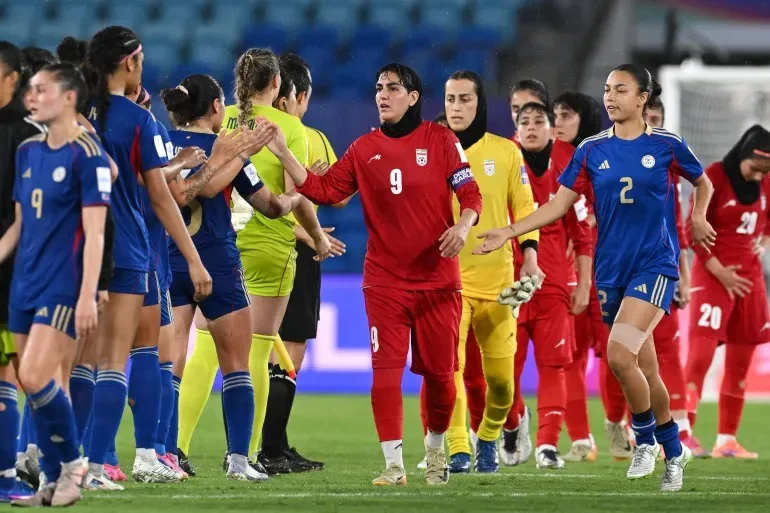
Australia has officially granted asylum and long-term visas to five members of the Iranian national women’s football team. This significant decision comes amidst grave concerns for their safety and potential legal repercussions should they return to Iran. The players faced severe threats after refusing to sing their national anthem during a recent AFC Women’s Asian Cup tournament.
The incident that sparked these fears occurred prior to their opening group stage match against South Korea. The players’ silent protest, a refusal to sing the national anthem, led to severe accusations, including being branded as ‘traitors in wartime’ by an Iranian state television presenter. Such accusations have created a climate of intense fear, prompting widespread concerns about their well-being and freedom upon any potential return to their home country.
Australian Home Affairs Minister Tony Burke publicly extended a warm welcome to the five Iranian footballers, emphasizing Australia’s commitment to ensuring their safety. Minister Burke encouraged the athletes to consider Australia a secure and welcoming new home, offering them a fresh start away from potential dangers.
The five players who have successfully secured asylum include the team’s captain, Zahra Ghanbari, along with midfielders Fatemeh Pasandideh, Zahra Sarbali Alishah, and Mona Hamoudi, and defender Atefeh Ramezanizadeh. Their identities were confirmed as part of the asylum process.
While these five have been granted refuge, other members of the Iranian women’s football team, who were also in Australia for the AFC Women’s Asian Cup, are currently housed in a safe location. They are reportedly staying in a luxurious hotel on the Gold Coast in Queensland, ensuring their immediate security. Minister Burke further confirmed that the Australian government has also extended offers of asylum opportunities to these remaining team members, ensuring a clear pathway to safety for anyone who wishes to pursue it.
The perilous situation of the Iranian team drew considerable international attention, notably from former US President Donald Trump. Prior to Australia’s official decision, Trump had publicly advocated for asylum for the Iranian women’s team, appealing directly to Australian Prime Minister Anthony Albanese for assistance in their plight. He later commented on the situation via Truth Social, noting that five players were being cared for, while others were contemplating their next steps, with some potentially returning home. Trump highlighted the complex dilemma faced by the athletes, acknowledging their profound concerns for their families’ safety in Iran, suggesting that threats could extend to family members if the players chose not to return.
Indeed, the former US President had previously expressed deep concerns that returning the players to Iran could expose them to extreme dangers, including the grave risk of death, underscoring the critical severity of the threats they faced for their act of protest.