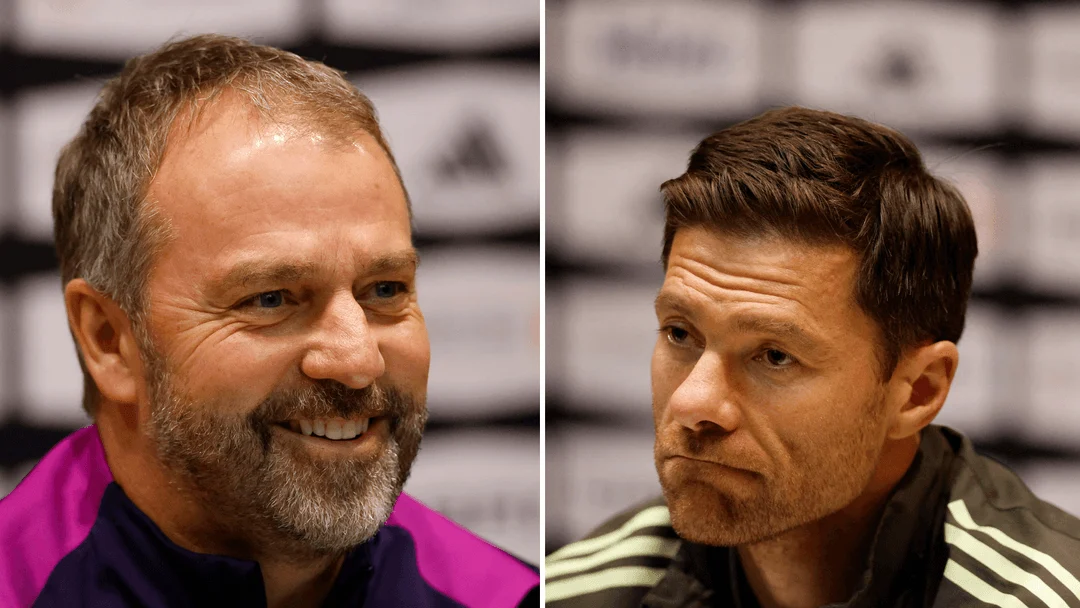
In the demanding world of top-tier football, a club’s faith, or lack thereof, in its manager often manifests in two stark ways: a continued tenure or a swift dismissal. This dynamic is clearly exemplified by the contrasting fates of Hansi Flick at Barcelona and Xabi Alonso at Real Madrid. Despite both managers initially posting strikingly similar statistics in their early stints, the decisions made by their respective clubs diverged significantly, offering a compelling study in leadership philosophy and patience.
Over recent months, both Barcelona and Real Madrid have provided the football world with two distinct case studies in managerial leadership. Intriguingly, when comparing the first 34 matches managed by both Hansi Flick and Xabi Alonso, their records were identical: 24 wins, 4 draws, and 6 losses. However, the subsequent display of trust from their respective club managements could not have been more different. While Flick received unwavering support and full confidence from the Barcelona hierarchy, Real Madrid opted for a different path, terminating Alonso’s tenure after merely seven months. This decision by ‘Los Blancos’ effectively signaled a loss of faith in the Spanish tactician, even despite his previous commendable work at Bayer Leverkusen.
At Barcelona, the club leadership made a deliberate choice to place immense trust in the German coach, Hansi Flick. They not only believed in his tactical vision and long-term development plan but also committed to providing him with ample time to implement it. Even when facing defeats, draws, and significant criticism from a passionate fanbase, the Catalan giants, affectionately known as ‘Blaugrana’, remained steadfast in their unwavering support for the 60-year-old manager. This commitment was further cemented with the offer of a new multi-year contract, signaling strong confidence and a collaborative partnership. This robust backing from the Barcelona board underscores a philosophy that immediate match results are not the sole metric for evaluating Flick’s work. The former Bayern Munich coach has been afforded the necessary space and time to address team deficiencies, introduce new techniques, refine playing styles, and ultimately forge a stronger, more resilient team for years to come.
In stark contrast, Xabi Alonso’s situation at Real Madrid unfolded entirely differently. The Real Madrid hierarchy took merely 217 days to evaluate the work of the then 44-year-old manager, making their decisive move following the team’s defeat in the Spanish Super Cup final against fierce rivals Barcelona. The former Real Madrid midfielder, despite his pedigree, was seemingly not granted adequate time by the club’s management to fully embed his philosophical ideas into the squad or to systematically address and rectify the team’s shortcomings as he envisioned. Challenges were abundant, including frequent player injuries, with 26 separate instances affecting the squad, and a perceived struggle among players to fully grasp and adapt to Alonso’s new tactical system. While individual brilliance from stars like Kylian Mbappé and goalkeeper Thibaut Courtois often salvaged victories in some matches, Real Madrid frequently faltered in major encounters, displaying a lack of clear strategic direction and a noticeable breakdown in team cohesion.
When comparing the distinct philosophies of these two footballing giants, particularly in light of their managers’ initially identical statistics, the contrast is profound. Barcelona consciously opted for a strategy of patience and long-term commitment, entrusting Hansi Flick with the process of building. Real Madrid, on the other hand, prioritized immediate results, choosing a swift managerial change with Xabi Alonso. This dichotomy highlights a fundamental difference in club management, where one club prioritizes fostering a sustainable process, while the other demands instant gratification and tangible success.