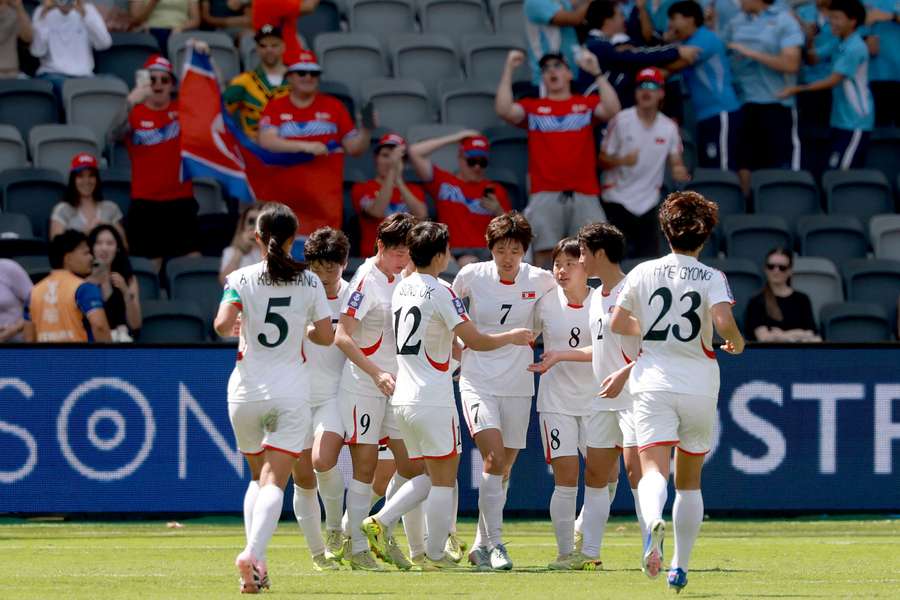
The North Korean women’s national football team has secured its place in the FIFA Women’s World Cup 2027, marking a significant return to the global stage after a 16-year absence. The upcoming tournament is set to be hosted in Brazil. Their last appearance at the prestigious event was in 2011.
The qualification was achieved through a decisive 4-0 victory over the Taiwan women’s national team in the playoffs of the 2026 AFC Women’s Asian Cup, which took place in Australia. The goals in this crucial match were spearheaded by Hong Song-Ok, who netted a hat-trick, with the final goal coming from Kim Kyong-Yong. This playoff fixture served as the Asian Football Confederation (AFC) qualifier, offering a World Cup berth to teams that had been eliminated from the last eight stage of the AFC Women’s Asian Championship 2026.
Other Asian powerhouses, including the women’s teams from Australia, China, Japan, and South Korea, automatically advanced to the 2027 FIFA Women’s World Cup in Brazil by reaching the semi-finals of the 2026 AFC Women’s Asian Cup.
Currently, the North Korean women’s national team holds a respectable 10th position in the world rankings. Notably, their under-17 and under-20 women’s teams have achieved significant international success, each claiming two World Cup titles in their respective age categories.
This return to the Women’s World Cup is particularly poignant for North Korea, given its historical context. The team first participated in the World Cup in 1999 and subsequently made four consecutive appearances. However, their involvement was disrupted by a ban from competition in 2015 following cases of drug use. The team then failed to secure a spot in the qualifiers for the 2019 World Cup. Furthermore, between 2019 and 2023, the North Korean women’s team opted to withdraw from World Cup qualifiers and other international matches due to concerns related to the COVID-19 pandemic. Their qualification for the 2027 tournament therefore represents a notable comeback after a period of significant challenges and absence from major international competitions.