Thailand 2025 – The 33rd Southeast Asian Games (SEA Games) in Thailand has become a hotbed of controversy, with allegations of biased officiating marring the Pencak Silat competition and drawing significant criticism from participating nations. Following dismay expressed by the Malaysian Pencak Silat team, Vietnam has also reported similar experiences, pointing to decisions that appear to favor the host country.
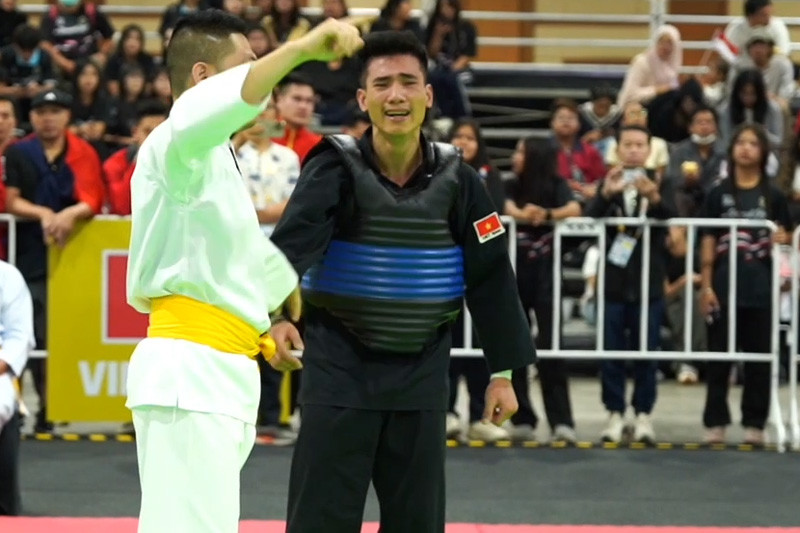
One of the most contentious incidents involved Vietnamese Pencak Silat athlete Vu Van Kien in the men’s 60kg semi-finals on December 16, 2025. Kien was reportedly dominating his bout against Thai opponent Janjaroen Tinnapat, holding a significant lead of 52-34 with only four seconds remaining in the match. During a critical moment, Kien attempted a legitimate kick to his opponent’s torso. However, the Thai athlete allegedly lowered his head intentionally, causing Kien’s foot to connect with his neck—a forbidden area for strikes. The Thai athlete immediately collapsed, clutching his face in apparent pain, prompting urgent medical intervention. After deliberation, the referees disqualified Vu Van Kien, declaring him the loser. This decision left the Vietnamese athlete devastated, collapsing on the mat in protest and visible distress over what he perceived as an unfair ruling. The Vietnamese coaching staff later asserted that the Thai athlete had exploited the rules, noting that Kien’s kick merely grazed the neck area, not the face, which is typically a more severe foul. Pencak Silat regulations strictly prohibit strikes to the head, neck, nape, face, and groin.
Adding to the tournament’s contentious atmosphere, another controversial decision unfolded on the same day in the men’s U65kg Pencak Silat semi-finals. Vietnamese athlete Nguyen Minh Triet was struck in the neck by his Malaysian opponent. In stark contrast to the earlier incident involving Vu Van Kien, referees ordered Triet to immediately stand up and continue the match. Despite vigorous protests from the Vietnamese team and requests for medical assessment, the officials ultimately awarded the victory to the Malaysian competitor.
Earlier in the tournament, Malaysian Pencak Silat athlete Nor Farah Mazlan also faced a controversial outcome in her Class B (50-55kg) match against a Thai competitor. The bout concluded with a tied score of 60-60. However, event organizers declared the Thai athlete the winner, citing rules and claiming the Malaysian athlete had committed more errors during the contest, a decision that sparked further accusations of bias.
The frustration over refereeing and judging standards at the 2025 SEA Games has been a recurring theme. In a separate incident within the women’s 45kg Muay Thai competition, a Vietnamese coach visibly lost his temper, throwing a water bottle into the ring to protest what he deemed unfair scoring by the judges. The Vietnamese athlete had reportedly been dominant from the start, even knocking down her Filipino opponent. Yet, after the first two rounds, the Filipino opponent was controversially ahead on points. The enraged coach not only protested vociferously but also instructed his athlete to abandon the fight mid-match, refusing to continue under what he perceived as biased judging.
These repeated incidents have cast a shadow over the 33rd SEA Games 2025, leading to widespread public criticism regarding the integrity and consistency of officiating standards.