
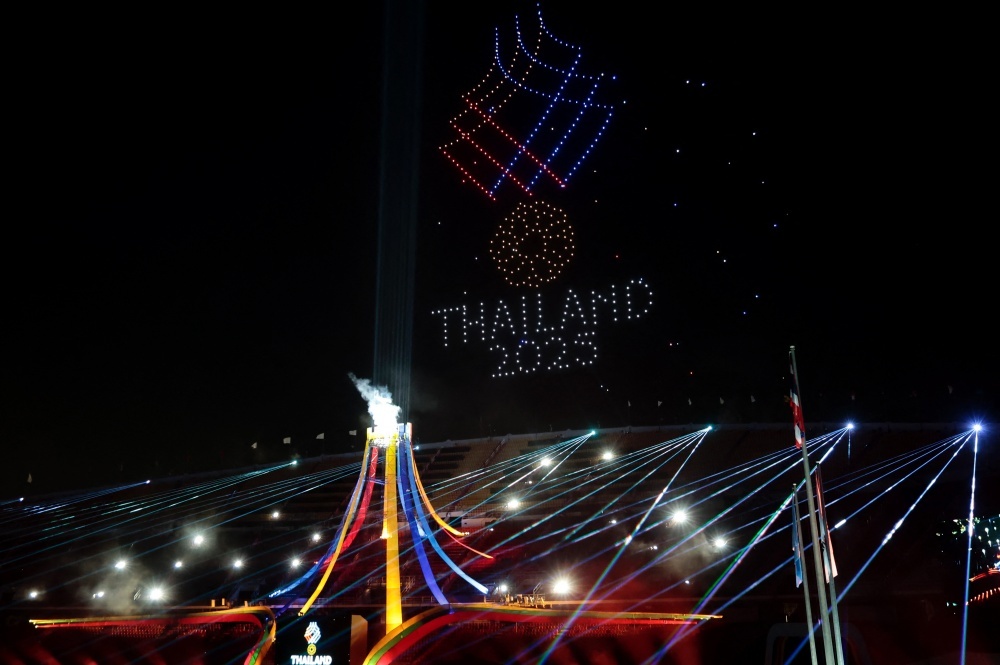
The 33rd Southeast Asian Games (SEA Games 2025) officially concluded on the evening of December 20, 2025, in Bangkok, Thailand, following a tumultuous run marked by significant controversy. Despite the various disputes and challenges, host nation Thailand emerged victorious, comfortably topping the overall medal table with a dominant performance.
The closing ceremony, which commenced at 7:30 PM on December 20, was a vibrant affair featuring a rich display of cultural performances, a grand parade of national delegations, and the symbolic handover of the SEA Games flag. This important gesture officially transferred hosting responsibilities from Thailand to Malaysia, which is set to stage the 34th SEA Games in September 2027. However, the ceremony was not without its own moment of unintentional humor when Deputy Prime Minister Thamanat Prompow, also serving as the Minister of Agriculture and Cooperatives and an inspector for the Ministry of Tourism and Sports, mistakenly referred to the ‘closing’ ceremony as an ‘opening’ during his official address. This gaffe quickly became a topic of widespread discussion and amusement across national and international social media platforms.
Throughout its eleven days of official competition, the 33rd SEA Games was frequently overshadowed by a series of controversies that began even before the opening ceremony. A primary concern centered on persistent allegations of biased refereeing and judging, which reportedly led to numerous protests and heated confrontations, both verbal and physical, from several visiting athletic teams and officials. These delegations expressed strong frustration and anger over decisions perceived to unfairly favor the host nation’s athletes during critical moments of competition. Beyond the issues of competitive fairness, the organizational standards of the 2025 SEA Games also drew considerable criticism from both domestic and international observers. Reports highlighted significant technical errors and logistical shortcomings in event management, hospitality arrangements, and the suitability of some competition venues, many of which were deemed not to meet established regional or international standards.
Despite these off-field issues, Thailand’s athletes delivered a truly dominant performance, securing an impressive 233 gold medals out of a total of 499 medals won across various disciplines. This remarkable achievement not only placed Thailand at the pinnacle of the medal standings but also set a new SEA Games record for gold medals won by a host nation, surpassing Vietnam’s previous record of 205 golds achieved when they hosted the 31st SEA Games.
The final medal tally saw Indonesia finish in second place with a total of 333 medals, including 91 golds. Vietnam secured third position with 278 medals, 87 of which were gold. Malaysia, the upcoming host nation, finished fourth with 231 total medals, comprising 57 golds. Singapore rounded out the top five with 202 medals, including 52 golds. Other participating nations outside the top five included the Philippines, Myanmar, Laos, Brunei, and East Timor.
Adding to the event’s complexities, Cambodia controversially withdrew from the 33rd SEA Games in Thailand. Although Cambodian delegates initially participated in the official opening ceremony on December 9, 2025, the National Olympic Committee of Cambodia (NOCC) later confirmed their withdrawal via a letter dated December 10, 2025. The NOCC cited safety concerns for their athletes amidst a reported resurgence of border tensions between Thailand and Cambodia as the primary reason for their decision.