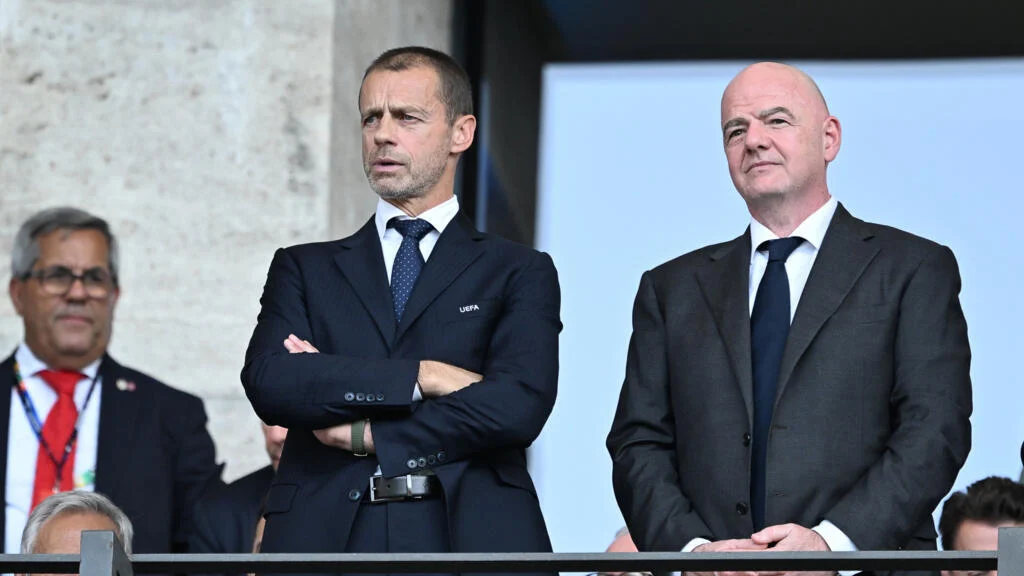
The Union of European Football Associations (UEFA) has reportedly renewed its criticisms regarding the management and governance practices under FIFA President Gianni Infantino. These renewed concerns emerge even after UEFA, alongside several other football confederations, previously stepped back from a potential boycott of the FIFA World Cup. This ongoing tension highlights fundamental disagreements between European football’s governing body and the global football authority.
UEFA’s concerns are understood to focus on a range of issues, primarily revolving around FIFA’s contentious proposals for a biennial World Cup. These plans, which suggested holding the flagship tournament every two years instead of the traditional four-year cycle, were vehemently opposed by UEFA and several other confederations. Their objections centered on the potential for increased player burnout, an overcrowded international match calendar, and a perceived devaluation of major continental competitions such as the UEFA European Championship and the Copa América.
While the explicit threat of a World Cup boycott, primarily from European and South American nations, was eventually withdrawn—a move that signaled a temporary de-escalation of the public dispute—UEFA’s recent statements indicate that underlying issues related to global football’s strategic direction and leadership remain unresolved. The European governing body continues to advocate for its distinct vision for the future of the sport, often clashing with initiatives put forward by FIFA. This persistent friction underscores the complex power dynamics at play within international football, particularly as discussions surrounding the restructuring of the global football calendar and competition formats continue to unfold.