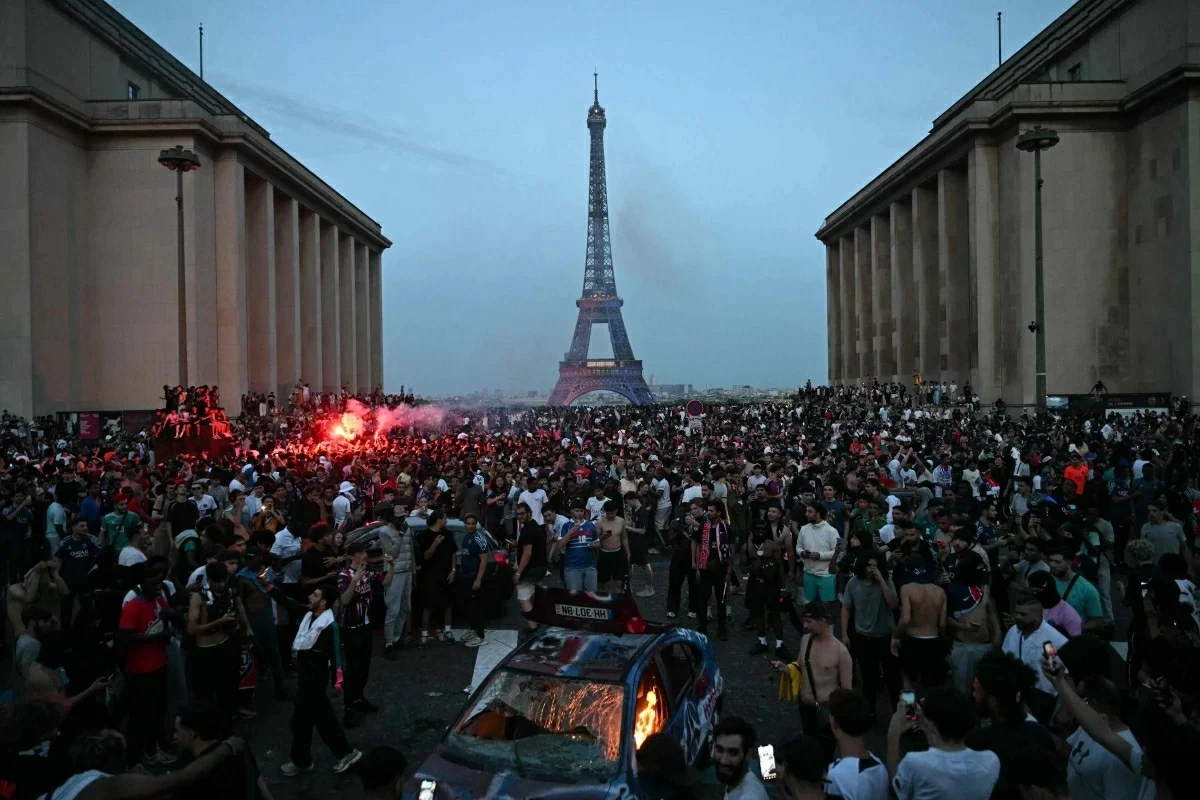
Celebrations following Paris Saint-Germain’s recent UEFA Champions League victory took a dark turn across France, as authorities reported over 700 arrests amidst widespread violence. The jubilant atmosphere, intended to mark a historic achievement for the football club, was tragically marred by clashes with police and a fatal car accident.
The unrest unfolded as thousands of ecstatic PSG supporters flooded the streets of Paris and other cities to commemorate their team’s triumph. The French giants had reportedly secured the coveted Champions League title by defeating Arsenal in a hard-fought final, decided by a penalty shootout, on May 30th in Budapest, Hungary.
While many celebrated peacefully, significant pockets of violence quickly emerged across the nation. Clashes between some unruly fans and law enforcement officers were reported in various urban centers. To maintain order and ensure public safety during the large-scale celebrations, French authorities had deployed an extensive security presence, with more than 22,000 police officers stationed nationwide. Despite these comprehensive measures, a number of fans ignited fireworks in unauthorized areas, contributing to the chaotic scenes.
French Interior Minister Laurent Nunez confirmed the severity of the incidents, stating that at least 57 security personnel sustained injuries, with eight of them requiring serious medical attention. Compounding the tragedy, the Office of the Public Prosecutor of Paris also announced that a 20-year-old man died in a car accident that occurred amidst the celebratory gatherings.
Minister Nunez further detailed the extensive nature of the disturbances, confirming that at least 15 cities and 71 districts across France experienced violence during the UCL title celebrations. In total, approximately 780 supporters were arrested. This figure represents a 32% increase in arrests compared to the celebrations that followed Paris Saint-Germain’s Champions League campaign in the previous season, highlighting a significant escalation in disorderly conduct.